
Top 7 Smart Water Leak Sensors for Automated Home Protection in 2025
Water damage can hit hard, but you can stay ahead with a smart water leak sensor. Every day, about 14,000 people in the U.S. face water leaks at home. Take a look at these numbers:
| Statistic Description | Data (2024/2025) |
|---|---|
| Daily water damage incidents in the U.S. | 14,000 |
| Average insurance payout per water damage claim | $13,954 |
| Annual water damage claim frequency | 1 in 60 insured homes (1.6%) |
A smart water-leak detector sends real-time alerts, so you can act fast. With a smart water leak detector as your smart home device, you get real-time protection and peace of mind. These water leak sensors make home automation simple and help you avoid costly repairs.
Why Smart Water Leak Sensors Matter
Preventing Water Damage Automatically
You probably don’t think about leaks until you see a puddle or a stain. But most water damage starts small and hidden. As a homeowner, you face a higher risk from leaks than from fire or theft. In fact, leaks are seven times more likely than fires and five times more likely than break-ins. Here’s what you should know:
- Leaks often hide behind walls, under floors, or in ceilings.
- Common sources include slow drips behind washing machines, under sinks, or near water heaters.
- Small leaks can grow, causing mold, warped floors, and expensive repairs.
- Larger homes have more places where leaks can start, like old pipes or faulty appliances.
- If you’ve had a leak before, you’re two to three times more likely to have another.
A smart water leak sensor gives you reliable leak detection. It works around the clock, so you don’t have to check for leaks yourself. With early detection, you can stop problems before they get worse.
Peace of Mind with Real-Time Alerts
Imagine you’re on vacation and a pipe bursts at home. Traditional alarms only make noise in the house. You might not hear them if you’re away. Smart water leak sensors change that. They send real-time alerts to your phone or smart device. You get notified right away, no matter where you are.
Facility managers say these real-time alerts can prevent water damage that costs $15,000 or more. You can act fast, call a plumber, or even shut off the water remotely. Insurance companies like these systems, too. They may offer lower premiums because you’re protecting your home. Real-time alerts mean you stay in control and avoid big repair bills.
Seamless Integration with Smart Home Systems
Smart water leak sensors fit right into your smart home automation setup. You can connect them to smart home systems like Samsung SmartThings or Aqara. Many sensors use Zigbee and work with hubs that support the Matter standard. This makes it easy to add water leak detection to your home automation.
With smart home systems, you can set up automatic actions. For example, if a sensor detects water, your system can shut off the main valve or send you a message. Homeowners love this extra layer of safety. You get real-time updates, early detection, and peace of mind—all working together to keep your home safe.
Top 7 Smart Water Leak Sensors for 2025
Choosing the right water leak sensor can feel overwhelming. You want something that fits your home, works with your smart devices, and keeps you safe from water damage. Here’s how we picked the best options for 2025:
- Real-time alerts and notifications keep you updated about leaks.
- Integration with smart home systems like Alexa, Google Assistant, and Apple HomeKit.
- Water usage monitoring helps spot unusual patterns.
- Long battery life and flexible power options.
- Reliable connectivity with Wi-Fi, Zigbee, or Bluetooth.
- Advanced sensor technology for accurate detection.
- Easy installation and setup.
- Consistent performance in detecting both small drips and big leaks.
- Extra features like automatic shut-off valves.
- Works in different areas—kitchens, bathrooms, basements.
- Compatibility with your other smart home devices.
- Fewer false alarms thanks to smart technology.
We tested each smart water leak sensor for how well it fits into your home, how easy it is to set up, and how reliable it is in real-world situations. Now, let’s look at the top three picks.
First Alert L1 Smart Water Leak Detector
You want a smart water leak detector that does more than just beep. The First Alert L1 gives you real-time alerts for leaks, freezing temperatures, and humidity changes. You get notifications on your phone and by email through the Resideo app. If you’re home, you’ll also hear a loud alarm right at the sensor.
You can place this water leak sensor almost anywhere because it runs on two AA batteries. No need to find an outlet. The 5-foot sensor cable helps you reach behind appliances or under sinks. You connect it to your Wi-Fi (2.4 GHz), so you always know what’s happening, even if you’re away.
Tip: The First Alert L1 works with Resideo and Honeywell Home devices, plus Alexa and Google Assistant. You can add it to your smart home system without extra hubs.
Setup is quick. You don’t need a professional, but you can get one if you want. The battery lasts a long time—after three months, it still has 99% charge. The sensor catches both small drips and big leaks. It even checks for freezing pipes and high humidity, which helps prevent mold.
Some things to keep in mind: The alarm is loud only if you’re nearby. You need a good Wi-Fi signal for the app to work. There’s no automatic shut-off valve, so you’ll have to turn off the water yourself if there’s a leak. If you want to cover more space, you can buy extra sensor cables.
The First Alert L1 stands out as a reliable smart home water leak detector. It fits into most smart homes and gives you peace of mind.
Moen Smart Water Leak Detector
If you want a water leak sensor that covers your whole house, the Moen Smart Water Leak Detector is a great choice. You can put it anywhere—under the washing machine, near the water heater, or in the basement. It watches for leaks, freezing, and humidity 24/7. You get alerts on your phone, by text, call, or email.
Here’s a quick look at what you get:
| Aspect | Details |
|---|---|
| Main Advantages | Easy setup, Wi-Fi connection, works with Moen Smart Water products, monitors temperature and humidity, 48-inch extension cable for tight spots, Alexa integration, prevents frozen pipes, reliable app alerts |
| Limitations | No Google Assistant, Apple HomeKit, or SmartThings support, no smart thermostat link, higher price than basic models |
| User Ratings and Feedback | Rated 8.5/10 by GearBrain, praised for reliability and easy setup, extra monitoring features appreciated |
| Price Comparison | Higher price, but advanced features justify the cost, cheaper models lack these features |
| Additional Features | Custom alerts for water, temperature, and humidity, app shows trends over 24 hours and 7 days, long battery life (CR123A), 1-year warranty |
You can use one sensor or add more for full-home coverage. The extension cable helps you reach tricky spots. The battery lasts up to two years, so you don’t have to worry about changing it often.
The Moen app makes it easy to see what’s happening in your home. You can check trends and get alerts right away. If you want, you can pair it with the Flo Smart Water Monitor and Shutoff for even more protection.
The main downside? It doesn’t work with Google Assistant or Apple HomeKit. The price is higher than basic models, but you get more features and better protection.
Govee H5054 Water Leak Sensor
Looking for an affordable water leak sensor that still packs a punch? The Govee H5054 might be your best bet. It connects to your Wi-Fi and sends instant alerts to your phone. You can also hear a loud, adjustable 100 dB alarm if you’re home—even if your Wi-Fi goes down.
You can link up to 10 sensors at once, so you get coverage in every room that matters. The waterproof design means you can use it in damp places like basements or bathrooms. The smart app lets you check battery status and see a record of leak events.
Note: The Govee H5054 works with Alexa and Google Home. Many other sensors don’t offer this level of smart home integration.
People like how fast it detects leaks and how easy it is to set up. The price is lower than many competitors, but you still get strong performance. Some users mention issues with battery status and occasional false alarms, but customer service responds quickly.
The Govee H5054 stands out as a budget-friendly app-connected leak detector. It gives you quick detection, smart alerts, and flexible coverage for your home.
SwitchBot Wi-Fi Water Leak Sensor
If you want a water leak sensor that is easy to use and fits right into your smart home, the SwitchBot Wi-Fi Water Leak Sensor is a strong pick. You do not need a hub or any extra equipment. Just connect it to your Wi-Fi, and you are ready to go. This sensor sends instant alerts to your phone when it detects water. You can also hear a loud alarm from the sensor itself, so you will know about leaks even if your phone is not nearby.
You can place the SwitchBot sensor under sinks, near washing machines, or by your water heater. The compact design makes it easy to hide. The battery lasts up to two years, so you do not have to worry about changing it often. The app lets you check the battery level and see a history of past leak events.
Tip: You can connect the SwitchBot water leak sensor to Alexa, Google Assistant, and IFTTT. This means you can set up routines, like turning off a smart plug or sending a message if a leak happens.
People like how simple the setup is. You just scan a QR code and follow the steps in the app. The sensor gives fast and accurate detection, so you can act before a small drip turns into a big problem. Some users wish it had a longer sensor cable, but most find it works well for common leak spots.
Eufy Water and Freeze Sensor
The Eufy Water and Freeze Sensor gives you strong protection against leaks and freezing pipes. You will need a Eufy HomeBase to use this sensor. The HomeBase uses Sub-1G communication, which helps the battery last up to two years. You can check the battery status anytime in the Eufy app.
Here is what you get with the Eufy Water and Freeze Sensor:
- The sensor sends instant notifications to your phone when it detects water or freezing temperatures.
- It does not have a built-in alarm. Instead, it signals the HomeBase, which makes a sound and sends alerts to your phone.
- You can customize the alarm sound in the app.
- The sensor works up to 200 meters away from the HomeBase, so you can cover large homes or basements.
- The detection is reliable for both water and freezing, but you cannot change the temperature threshold—it only alerts you when it drops below freezing.
You can trust this water leak sensor to catch leaks and cold spots quickly. The app makes it easy to see alerts and check battery life. The sensor does not make noise itself, but the HomeBase alarm is loud enough to get your attention.
Note: The Eufy Water and Freeze Sensor works best if you already use other Eufy smart home devices. It does not connect directly to Alexa or Google Home, but the app gives you all the control you need.
YoLink Water Leak Sensor 4
If you have a big house or want to cover lots of rooms, the YoLink Water Leak Sensor 4 is a great choice. This sensor uses LoRa technology, which means it can talk to the YoLink Hub from far away—even through walls and floors. You can place sensors in your basement, kitchen, or laundry room and still get reliable detection.
You will need the YoLink Hub to use this sensor. The hub connects to your Wi-Fi and lets you manage all your YoLink devices in one app. The YoLink Water Leak Sensor 4 does not work directly with SmartThings, but you can set up routines using Alexa or IFTTT. For example, you can create a virtual water sensor in SmartThings and trigger it with YoLink events. Alexa also recognizes the sensor as an open/close device, so you can build custom routines and notifications.
YoLink also offers a water shut-off valve that pairs with the sensor. If a leak happens, the system can turn off your main water line automatically. This gives you peace of mind, especially if you travel often.
You can also connect YoLink devices to Home Assistant. Just link your YoLink account, and you can control and monitor everything from one dashboard.
Pro Tip: Many users set up multiple YoLink sensors around their home. If any sensor detects water, the system can send alerts, trigger Alexa routines, or even shut off the water. This makes YoLink a top pick for full-home protection.
The YoLink Water Leak Sensor 4 stands out for its long-range communication, flexible integration, and strong detection. You get fast alerts and the option to automate your home’s response to leaks.
Aqara Water Leak Sensor
If you want a smart sensor that just works, the Aqara Water Leak Sensor might be your best pick. You can place this tiny device almost anywhere—under sinks, behind toilets, or next to your water heater. It fits in tight spots because it is small and wireless. You do not need to worry about plugging it in. The battery lasts up to two years, so you can set it and forget it.
Aqara makes setup easy. You connect the sensor to the Aqara Hub using Zigbee. The hub links to your Wi-Fi and lets you control everything from the Aqara Home app. You can also use Apple HomeKit, Alexa, or Google Assistant. This means you can get alerts on your phone, your smart speaker, or even your Apple Watch.
Tip: If you already use Aqara sensors for doors or motion, you can add the water leak sensor to your system in just a few taps.
You get instant alerts if the sensor detects water. The app sends a notification right away. The hub also sounds an alarm, so you will know about leaks even if your phone is off. You can set up automations, too. For example, you can have your smart lights flash red if a leak happens. Some people connect the sensor to a smart valve, so the water shuts off automatically.
Here is a quick look at what you get with the Aqara Water Leak Sensor:
| Feature | Details |
|---|---|
| Power | CR2032 battery (up to 2 years) |
| Connectivity | Zigbee (requires Aqara Hub) |
| Smart Home Support | Apple HomeKit, Alexa, Google Assistant |
| Alerts | App notifications, hub alarm, automations |
| Size | Small, fits in tight spaces |
| Water Resistance | IP67 (can handle splashes and brief submersion) |
You do not need to worry about false alarms. The sensor only triggers when both metal probes touch water. You can test it by dipping the bottom in a cup of water. The app will show the alert right away.
Some users wish the sensor had a built-in temperature monitor. Others want a longer battery life. Most people say it is reliable and easy to use. You can add more sensors if you want to cover your whole house.
If you want a simple, smart, and flexible way to protect your home, the Aqara Water Leak Sensor is a strong choice.
Sensor Comparison Summary

Features at a Glance
You want a water leak sensor that fits your needs. Some sensors focus on fast detection, while others add extra features like temperature or humidity monitoring. Here’s a quick look at what you get with the top picks:
| Sensor Name | Leak Alerts | Freeze Alerts | Humidity Alerts | Battery Life | Smart Home Ready |
|---|---|---|---|---|---|
| First Alert L1 | Yes | Yes | Yes | 2+ years | Yes |
| Moen Smart Detector | Yes | Yes | Yes | 2 years | Alexa |
| Govee H5054 | Yes | No | No | 1 year | Alexa, Google |
| SwitchBot | Yes | No | No | 2 years | Alexa, Google |
| Eufy Sensor | Yes | Yes | No | 2 years | Eufy App |
| YoLink Sensor 4 | Yes | No | No | 5 years | Alexa, IFTTT |
| Aqara Sensor | Yes | No | No | 2 years | HomeKit, Alexa |
You can see that most sensors offer fast detection and long battery life. Some, like YoLink, last up to five years. Others, like Moen, give you extra data about your home’s environment.
Integration and Compatibility
You want your leak detection systems to work with your smart home. Most sensors use Wi-Fi, Zigbee, or Bluetooth. If you use Alexa or Google Assistant, you have many options. Some sensors, like Aqara and YoLink, connect with Apple HomeKit or IFTTT. Matter support is rare, but a few brands like Samsung and Arre are starting to offer it. Choosing a sensor that matches your smart home setup helps you get reliable leak detection and smooth automation.
Tip: Always check if your sensor works with your current hub or voice assistant. This makes setup easy and keeps your home protected.
Value and Reliability
Homeowners want sensors that last and work every time. Most leading sensors give you at least two years of battery life. Some, like YoLink and Abode, last up to five years. You also get a standard one-year warranty with many brands. Here’s a chart showing how long top sensors last:
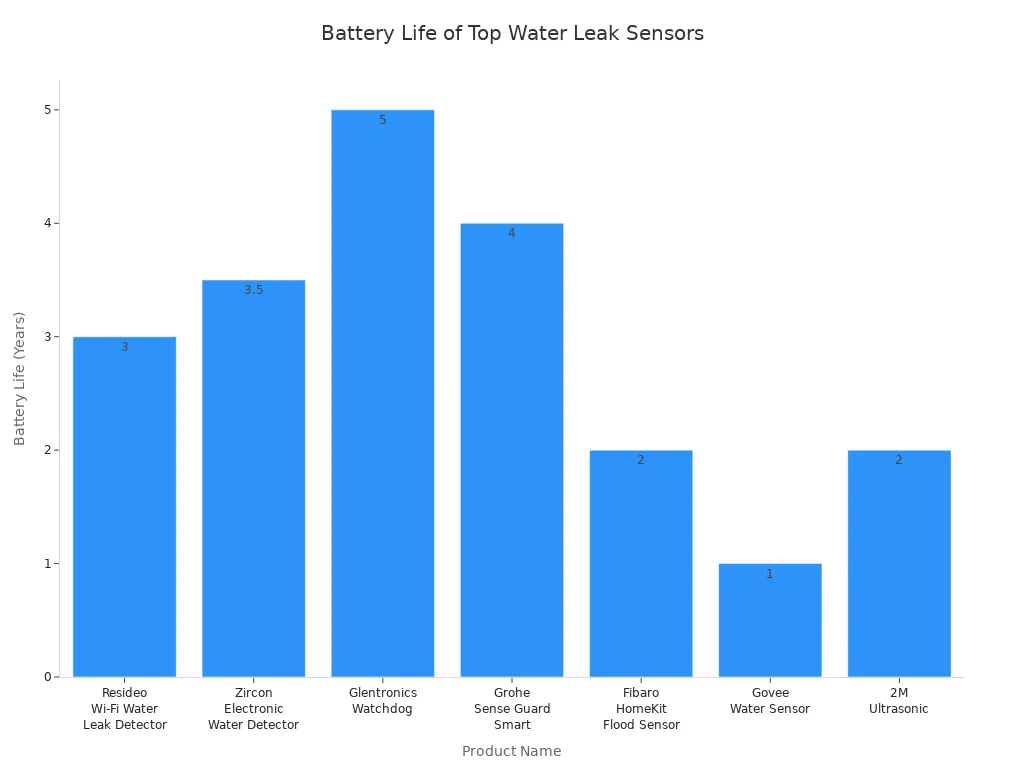
You can trust these sensors for reliable leak detection. Homeowners report that they get fast alerts and few false alarms. If you want peace of mind, pick a sensor with a strong track record and good warranty. That way, you know your home stays safe from leaks year after year.
Smart Water Leak Sensor Buying Guide
Smart Home Integration
When you pick a smart water leak sensor, you want it to work with your other smart devices. Many sensors connect to systems like Alexa, Google Assistant, or Apple HomeKit. This lets you set up routines, like turning off a smart plug or sending a message if a leak happens. Some sensors even link with building automation systems for more control. If your sensor can talk to your smart home hub, you get faster alerts and can automate things like shutting off water valves. Look for sensors that support popular platforms and offer easy app controls. This way, you can manage everything from one place and enjoy remote monitoring wherever you are.
Tip: Choose a sensor that fits your current smart home setup. It saves you time and avoids headaches during installation.
Power Source and Battery Life
Battery life matters a lot for water leak sensors. You do not want to change batteries every few months. Some sensors last up to five years, while others need new batteries after just six months. For example, the X-Sense SWS51 can run for three years on AAA batteries, and some models even have low battery alerts. Long-lasting batteries mean your sensor keeps working, even during power outages. Some sensors use low-power electronics or backup power to stay on all the time. Always check the battery type and how easy it is to replace. A good sensor should keep you protected without much effort.
Installation and Placement
Installing water leak sensors can be tricky. Leaks can start in hard-to-reach places, like behind appliances or under floors. Some sensors have a fixed shape, which makes them tough to fit on pipes or uneven surfaces. Flexible, sticker-like sensors help solve this problem. You can trim them to fit tight spots or wrap them around tricky plumbing. Make sure you place sensors where leaks are most likely, such as near water heaters, washing machines, or under sinks. Easy access for maintenance is important, too. If you can check or move your sensor without hassle, you will catch leaks early and avoid big repair bills.
Alert Types and Automation
When a leak happens, you want to know right away. Smart water leak sensors give you several ways to get alerts. Most sensors send notifications to your phone through an app. Some also send emails or even text messages. If you are home, you might hear a loud siren from the sensor itself. For example, the Third Reality Zigbee Water Leak Sensor has a built-in 120 dB siren. It also supports app notifications and email alerts when you connect it to a compatible Zigbee hub like SmartThings. That means you get a warning no matter where you are.
Some sensors, like the Insteon Water Leak Sensor, send push notifications and emails. You can also link them to sirens in the Insteon system. This way, you get both a loud sound and a message on your phone. Many sensors let you set up custom alerts, so you can choose how you want to be notified.
Automation makes things even easier. You can connect your sensor to other smart devices in your home. For example, if a leak is detected, your system can turn off a smart water valve or flash your smart lights. Some sensors work with Alexa, Google Assistant, or Apple HomeKit. You can create routines that fit your needs. Maybe you want your thermostat to turn off if a leak is found, or you want a camera to start recording. With automation, you do not have to act alone. Your smart home helps protect you.
Tip: Set up multiple alert types. This way, you never miss a warning, even if your phone is on silent or you are away from home.
Price and Value
Smart water leak sensors come in a wide range of prices. You can find basic models for as little as $6, while advanced sensors with more features cost up to $40. The price often matches the features and reliability you get.
Here is a quick look at how some popular sensors compare:
| Sensor Model | Price Range (USD) | Key Features & User Feedback | Value Proposition |
|---|---|---|---|
| HS-LS100+ Z-Wave Water Leak Sensor | $39.00 | Compact, easy installation, reliable Z-Wave Plus communication | Higher price but offers robust features and reliability |
| ThirdReality Zigbee Water Leak Sensor | ~$20 | Good battery life (~18 months), reliable Zigbee mesh, effective audible alarm | Mid-range price with strong performance and practical dripping detection |
| Zooz Z-Wave ZSE42 | ~$23 | Suitable for multiple household locations, earlier models had battery issues but newer versions improved | Good balance of price and features; improved reliability in newer models |
| Tuya Zigbee Water Leak Sensor with Probe | $6 - $10 | Specialized use cases (water softener salt level, water tanks), very low cost | Budget option for less critical or specialized monitoring |
| Meian Water Leak Sensors | ~$6 | Limited reviews, low cost | Cost-effective but less proven in reliability |
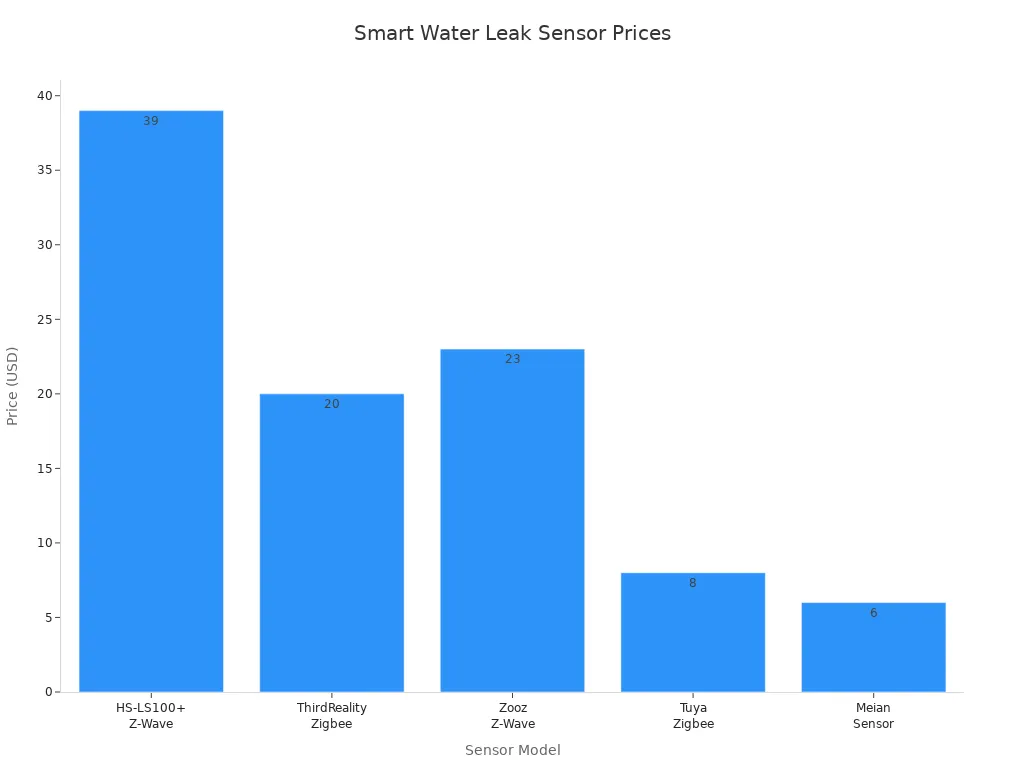
You do not always need the most expensive sensor. If you want basic protection, a budget model might work for you. If you need more features, like smart home integration or a loud siren, it makes sense to spend a bit more. Always check user reviews and think about what matters most for your home. A reliable sensor can save you thousands in water damage repairs, so it is worth finding the right balance between price and value.
Choosing the Right Water Alarm Sensors for Your Home
When you look for water alarm sensors, you want the best fit for your home and lifestyle. Every home is different, so you need to think about what matters most. Some water alarm sensors work better for full automation, while others save you money or connect with more smart home systems. Here’s how you can choose the right one.
Best for Full Automation
If you want your water alarm sensors to do everything for you, the YoLink Water Leak Sensor 4 stands out. You can set it up to send alerts, trigger Alexa routines, and even shut off your water automatically. This sensor uses LoRa technology, so it covers large homes and hard-to-reach spots. You need a YoLink hub, but it’s affordable and easy to bundle with sensors. Many homeowners love how YoLink lets them control leaks from anywhere. If you travel a lot or have a big house, this system gives you peace of mind.
Tip: Automatic shutoff is a must for vacation homes or if you leave your house empty for long periods.
Best Budget Option
You don’t have to spend a lot to get good water alarm sensors. The Phyn Smart Water Sensor gives you reliable leak detection for under $40. It checks for leaks, temperature changes, and humidity. You can use it alone or with the Phyn Plus system. Many homeowners pick this sensor because it balances price and features. If you want basic alerts and solid performance, this is a smart choice.
| Sensor Model | Price Range | Key Features |
|---|---|---|
| Phyn Smart Water Sensor | $36.99-$39.99 | Leak, temp, humidity detection; reliable alerts |
Best for Smart Home Integration
Some homeowners want water alarm sensors that work with every smart home platform. The Aqara Smart Water Leak Sensor T1 is your best bet. It connects with Alexa, Google Assistant, and Apple HomeKit. You can also use IFTTT and Home Assistant. This means you can set up custom routines, get alerts on any device, and control everything from one app. If you already use smart lights or speakers, Aqara fits right in.
| Sensor Name | Alexa | Google Assistant | Apple HomeKit | Other Platforms |
|---|---|---|---|---|
| Aqara Smart Water Leak Sensor T1 | Yes | Yes | Yes | IFTTT, Home Assistant |
Remember: Good placement and easy installation help your water alarm sensors catch leaks fast. Always check battery life and alert types before you buy.
Best for Large Homes
Do you have a big house or lots of rooms to protect? You need water alarm sensors that can cover every corner. Some sensors work best for large homes because they let you add many detectors and manage them all from one app. You can get real-time alerts and even set up alarms in different areas. Here’s what makes these water alarm sensors perfect for bigger spaces:
- You can manage up to 100 sensors with a single mobile app. This is great if you have a large home or even more than one property.
- These sensors send real-time alerts to your phone and sound alarms right where the leak happens.
- Some models come with long probes, up to 41 inches, so you can check for leaks behind appliances or near sump pumps.
- You don’t need a hub or subscription. Just connect to your home’s 2.4 GHz Wi-Fi for a secure link.
- If a leak is found, you can set the system to trigger other devices, like pumps or sirens, for extra safety.
- The batteries last up to two years, so you don’t have to worry about changing them often.
- You can place sensors anywhere—basements, laundry rooms, or under sinks—thanks to wireless design.
- Some kits let you monitor up to 17 spots at once, using Wi-Fi and long-range Sub-GHz signals. This means you get coverage even in far corners of your home.
- You can expand your network as your needs grow. Add more water alarm sensors for full-home protection.
With these features, you can relax knowing your whole house is covered. You get instant alerts, flexible placement, and easy control—all from your phone.
Best for Quick Installation
If you want water alarm sensors that are quick and easy to set up, you should look at the Flume Smart Home Water Monitor & Leak Detector. You don’t need to cut pipes, use tools, or call a plumber. The setup takes less than 10 minutes. Here’s how it works:
- Download the Flume app on your phone.
- Plug in the Flume Bridge and connect it to your Wi-Fi.
- Strap the sensor onto your water meter using the included bands.
That’s it! The batteries come pre-installed, so you don’t have to open anything. Many users say they finished the job before their coffee was ready. You get instant leak detection and water usage monitoring right away. The app guides you through every step, making it simple for anyone to use.
Tip: If you want to protect your home fast, choose water alarm sensors that don’t need wiring or special tools. You’ll save time and avoid stress.
With Flume, you get peace of mind and quick results. You can start protecting your home from leaks in just a few minutes.
You have seen the best smart water leak sensors for 2025. Each one helps homeowners protect their homes in a smart way. If you want full automation, try YoLink. For a budget pick, go with Govee. Aqara works great for smart home fans. These sensors give you safety and peace of mind. Homeowners can relax, knowing their homes stay dry.
Don’t wait for a leak—get smart protection now!
FAQ
How do smart water leak sensors work?
Smart water leak sensors use metal probes to sense water. When water touches the probes, the sensor sends an alert to your phone or sounds an alarm. You get notified right away, so you can act fast.
Where should I place my water leak sensors?
You should put sensors near places where leaks often start. Try under sinks, behind washing machines, near water heaters, or in basements. If you have a big house, use more sensors for better coverage.
Do I need Wi-Fi for these sensors to work?
Most smart water leak sensors use Wi-Fi to send alerts to your phone. Some use Zigbee or Bluetooth with a hub. If you want remote notifications, you need a good Wi-Fi connection.
How long do the batteries last?
Battery life depends on the sensor. Many last one to two years. Some, like YoLink, can last up to five years. You can check battery status in the app for most models.
Can I connect these sensors to my smart home system?
Yes! Many sensors work with Alexa, Google Assistant, or Apple HomeKit. You can set up routines, get voice alerts, or even turn off your water automatically if a leak happens.
Tip: Always check the sensor’s compatibility before you buy. This helps you avoid setup problems later.


